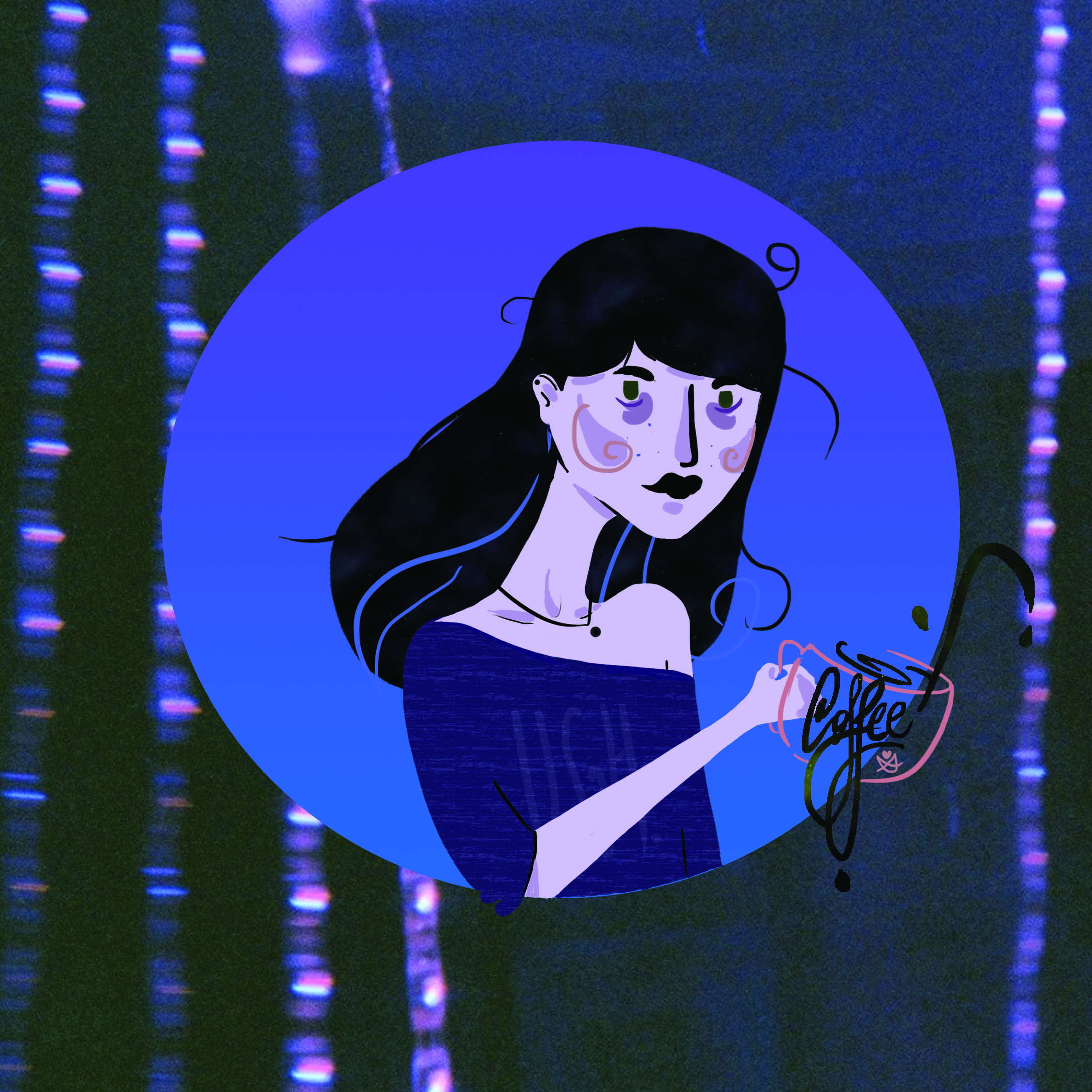
Image credit: Ana Dumitru
We live in an age where people look to science to explain themselves. Sometimes it’s neuroscience: brain scans, neurotransmitters, the promise of a biological key to unlock our moods and our choices. Other times it’s psychology: the stories we tell about our lives, the traumas we inherit, the patterns that repeat until we learn to see them. The two fields overlap, but they also diverge: one speaks in circuits and chemicals, the other in metaphors and meaning.
I often find myself caught in that space between. Like many readers, I want both: the clarity of science and the compassion of therapy. I want to know what’s firing in the brain when grief hits, but I also want to know how to sit with that grief when all is said and done.
That’s why I wanted to talk to Ana Dumitru. She’s a trainee clinical psychologist of Romanian origin now based in the UK, and she has made a career of standing in the in-betweens: East and West, research and clinical practice, therapist and human being. She’s worked with complex trauma, studied the mental health of therapists themselves, and often reflected on the cultural attitudes that shape how people seek help.
When she says therapy is “more like waves” rather than a straight line, she isn’t just talking about patients. She’s talking about systems, professional life, the ebb and flow between science and story. And maybe, about what it means to be human at all.
Of course, leaving aside the big thoughts about life, waves, and everything nice, there’s a more practical matter to attend to: how does one actually become a clinical psychologist in the UK? In short, you have to do a doctorate. But whatever your expectations are, I’m fairly certain they’re still far from reality.
“This training program is very intense, I’ll just say that…”
“And I don’t think there is anyone who does this doctorate and doesn’t come out feeling like this has been so much. Not necessarily all bad as an experience, just very intense and relentless. You have no time.”
The details might vary depending on the specific program, but the structure is the same: multiple rotations through NHS mental health services (learning disabilities, adult mental health, children and adolescent services, neuropsychology, and more) while simultaneously conducting academic research and attending classes. On paper, the schedule might seem clear: 3-4 days of clinical work and 1-2 study days per week. But, as Ana puts it: “How do you context-switch so much? It’s really confusing and you never have a proper schedule.”
And that’s still just scratching the surface. First, there’s the academic side. Unlike a pure research doctorate, where the focus is usually on a single project, clinical psychology training comes with layers: a main dissertation, comprised of a systematic review and an empirical study, going from generating the idea through data collection, analysis, and write-up, plus a couple of smaller, but still demanding assignments: two case studies and a service evaluation based on clinical data.
Then there’s the clinical work. “Every six months you switch the place you’re in, the people you meet, the way the service works, how they do their notes in the service. So you need to learn things every six months: learn people, learn how they do things in the service, what kind of therapy they might use, the population, what are the specifics of the population. […] You know, everyone does their admin very differently. Everyone does their reports very differently. Nothing is consistent across the systems that they use. I think now they’re trying to have one type of system that they use in all services, but I’ve had to learn five different systems. Obviously that’s additional admin work. “
It’s a rhythm of constant adaptation, but by the final year, some things narrow down. That’s when trainees specialize into an area of interest.
“Complex trauma is basically what it sounds like”
For Ana, that meant working with complex trauma in adults. As opposed to PTSD, which occurs usually due to a single traumatic incident, “complex trauma is really multiple events that lead to that. Oftentimes it’s when people experience, let’s say, childhood abuse, domestic abuse, or they might also have several single incidents within a shorter span of time that accumulate. They will have some of the same features as PTSD: nightmares, flashbacks; but it might also affect relational patterns, they might have attachment issues, or trouble regulating their emotions. So it’s more complex in that sense because it’s really a more pervasive pattern of trauma that people have.”
“A lot of my job is being in tune with what people are bringing”
It’s not surprising to anyone that the therapy for complex trauma is also…complex itself. It involves drawing on elements from multiple evidence-based approaches in an individually tailored manner. “The doctorate in clinical psychology is very much about the evidence base and the evidence base at the moment is mostly around CBT (cognitive behavioral therapy). But for complex trauma, there’s a lot of therapies that are very useful.
Schema therapy is one – it looks at different filters that people might have, called schemas, that develop from people’s experiences. Compassion-focused therapy is another one that’s fantastic. There is DBT, dialectical behavioral therapy, that was developed specifically for personality disorders. It’s a spin-off of CBT. There’s acceptance and commitment therapy. […]
My supervisor is also more of an integrative therapist, she draws on a lot of different modalities and that’s what I do in my work as well. I think that’s usually what works best with people. I don’t think there’s one size fits all. If people don’t fit into a box, then it’s not really useful. And people who have experienced trauma and abuse, they won’t fit into one box or another. Nobody really will fit into one box or another.
So I try to tailor my approach to the person that I’m working with and make it person-centered, make sure it’s trauma-informed, and work with a model that fits best with a person. Sometimes it is trial and error. Sometimes people might connect to certain elements, so I’ll integrate some of those. But really it’s a collaborative approach. They need to also give me feedback and work with that. I’m not gonna push any model onto someone if they’re not connecting with that. So a lot of my job is being in tune with what people are bringing.“
As you can imagine, conducting the kind of work that demands emotional attunement day after day, session after session, requires a lot of resilience. And it comes with challenges of its own.
“As a therapist, you’re often a container. With time, that kind of chips away at you.”
In her research, Ana investigated how that looks like for therapists with lived experience of mental ill health. Although still somewhat taboo, the issue is quite pervasive: “The research that I found in my literature review was showing that actually a lot of therapists, most, if not all, have either their own experience of mental ill health or some adjacency to that – say someone in their family growing up had some experience of mental ill health.”
During training, therapists typically receive some support through supervision, both from their mentor and their peers. “My supervisor doesn’t just keep an eye on me”, Ana points out. “We meet every week for at least an hour to discuss not only the cases that I have, what I’ve been trying or what the person’s response was to that, but it’s also a space to discuss what I bring into therapy, what I experience as a consequence of that session. But there’s also the concept of peer supervision, where you have a protected time to discuss with other therapists in the service. Everyone brings cases where they might be struggling with certain elements and everyone can chip in.”
But once the training wheels come off, even this limited form of support often disappears. “If you’re a therapist you’re, you know… a-okay! And you have to “take care of yourself”, because obviously yes, you work with trauma and that’s taxing.” At the same time, trying to “take care of yourself” and to ask for support comes with its own drawbacks. As Ana explains, “There’s that fear of being seen as not competent enough to do your job. But actually I am competent. I might be depressed a lot of the time, but I’m very competent at my job. So your competency comes into question and then suddenly it’s less of a “hey, maybe we’ll reduce your caseload for a few weeks or maybe you’ll take a break, we’ll support you. And it becomes a thing of, “Oof, are you safe to practice?” So a lot of people never seek support.”
And even when they do…
“In a world that’s struggling, willingness to look at the people who, actually, are managing themselves a lot of the time…”
The words trail off. “The NHS is on fire”, she continues. Of course, it’s not just the NHS: across healthcare systems worldwide, practitioners are left managing themselves in environments that give little back. Proposed solutions include access to therapy for therapists in a confidential and accessible manner and decreasing stigma towards those who seek help.
But when the focus is on survival, there is little space to attend to those who can hold on for a little longer. “I’ll give an example. In psychological services there are huge waiting lists for a lot of services. So what they do is, they change the criteria to be accepted in the service at the moment, because they’re just struggling with holding so many people. You just don’t have enough staff and enough time and enough space, even clinic rooms, to actually see people. So you make it harder for them to access your service. So then you reduce your waiting list, because actually people don’t meet the criteria. Or you do single assessments where you only see them once and then you’re like, ‘Yeah, but you’re not that bad. Come back later.’”
Still, a little is better than nothing. Despite its shortcomings, this burnt-out system becomes easier to appreciate when placed in comparison to emergent structures.
“I think at the base of our culture is this idea that you just have to do more, work harder.”
“I agree that there’s so many systemic pressures and issues in the NHS, but then again, we don’t have this in Romania. This is…inexistent. People are complaining that we’re doing an anxiety group and they only had these biscuits or it only lasts this long or whatever. Meanwhile I’m thinking…we don’t…this doesn’t exist in Romania. And here it’s for free! You’re getting this for free!”
Again, as with all systemic issues, lack of proper infrastructure is just one side of the story. Although attitudes towards mental health have begun to shift in recent years, the dominant mindset is still one of dismissal and grit: “The narrative is mental health only exists in the really severe people, and there it’s seen as really bad. If you have depression, you just need to get over it. You just need to just stop thinking about it. You’re depressed because you’re lazy, right? Mental health is not really recognized as a need people have and a very valuable thing to invest in. I think at the base of our culture is this idea that you just have to do more, work harder.”
Against that backdrop, it’s not surprising that therapy itself is often misunderstood. The cultural story of “working harder” and “getting over it” seeps into expectations of what therapy should be. Therapy becomes another thing you’re supposed to “get right,” another place to earn full marks.
“The therapist is not a mechanic; you’re not going there with a broken car and the mechanic is fixing it”
“That’s why therapy is really hard, actually. If you go through therapy and you’re like, ‘Oh, this is so easy and great, I’m getting all A’s,’ then maybe you’re not doing it right. But people don’t know, because we have a very romanticized view of therapy. We see movies, the Freudian couch, you sit down, you talk, you have an insight, and then everything is fixed. It doesn’t work like that. It’s not linear.”
It’s true that therapy, as life itself, is rarely linear, but where does that leave us? As Ana puts it, being caught between worlds, roles, and expectations is always a struggle. The key isn’t to erase that tension, but to learn how to hold steady, go with the flow, and blend human values with systemic support.
“It’s demanding work and it unfolds within systems that are themselves stretched thin, but even within these pressures there needs to be space for compassion, authenticity, resilience, and creativity. And I guess that therapy is like life – it’s rarely linear. Things come and go. It’s more like waves really. Sometimes the tide comes, sometimes the tide goes, and afterwards it feels very empty. And that’s okay. It’s part of life.”
What did you think about this post? Let us know in the comments below. And if you’d like to support our work, feel free to share it with your friends, buy us a coffee here, or even both.
Subscribe to our RSS feed here.
You might also like:
Leave a Reply